Introduction
You finish a feature on a Tuesday afternoon. Your IDE is still echoing with the remnants of an AI-generated PR, and you feel a distinct sense of accomplishment. You wrote three hundred lines of code in twenty minutes. It passed the unit tests, the linter is happy, and the CI pipeline turned green.
Two weeks later, a bug report arrives. You open the file, but the code feels alien. You didn’t write it so much as you curated it, and now you have to reconstruct the logic from scratch. This is the new reality of the modern dev workflow.
In this post, we will explore why shipping code at record speed is often a trap and how to shift your focus from generation to long-term maintainability.
The Problem Worth Solving
The current AI hype cycle is obsessed with a single metric: lines of code per minute. When you use tools like Copilot or Cursor, the temptation to accept the “suggested path” is overwhelming. You are nudged toward immediate completion. The friction of typing is gone, but the friction of thinking has been replaced by the friction of reviewing.
This creates ghost code. This is code that works under your current constraints but lacks the deep architectural context that usually comes from the struggle of writing it yourself. When you struggle through a function, you internalize its side effects and edge cases. When an AI generates that same function, you often gloss over the implementation details because the code looks syntactically correct.
The result is a surge in technical debt that is harder to identify than legacy code. It is code that works, yet it is difficult to modify or debug because no one truly owns the mental model behind it. As noted in the recent Atlassian research on developer productivity, we are entering a phase where the bottleneck is shifting away from raw output and toward the cognitive effort required to maintain a complex system. We are optimizing for the first hour of a feature lifecycle while ignoring the next twelve months.
The Cognitive Ownership Framework
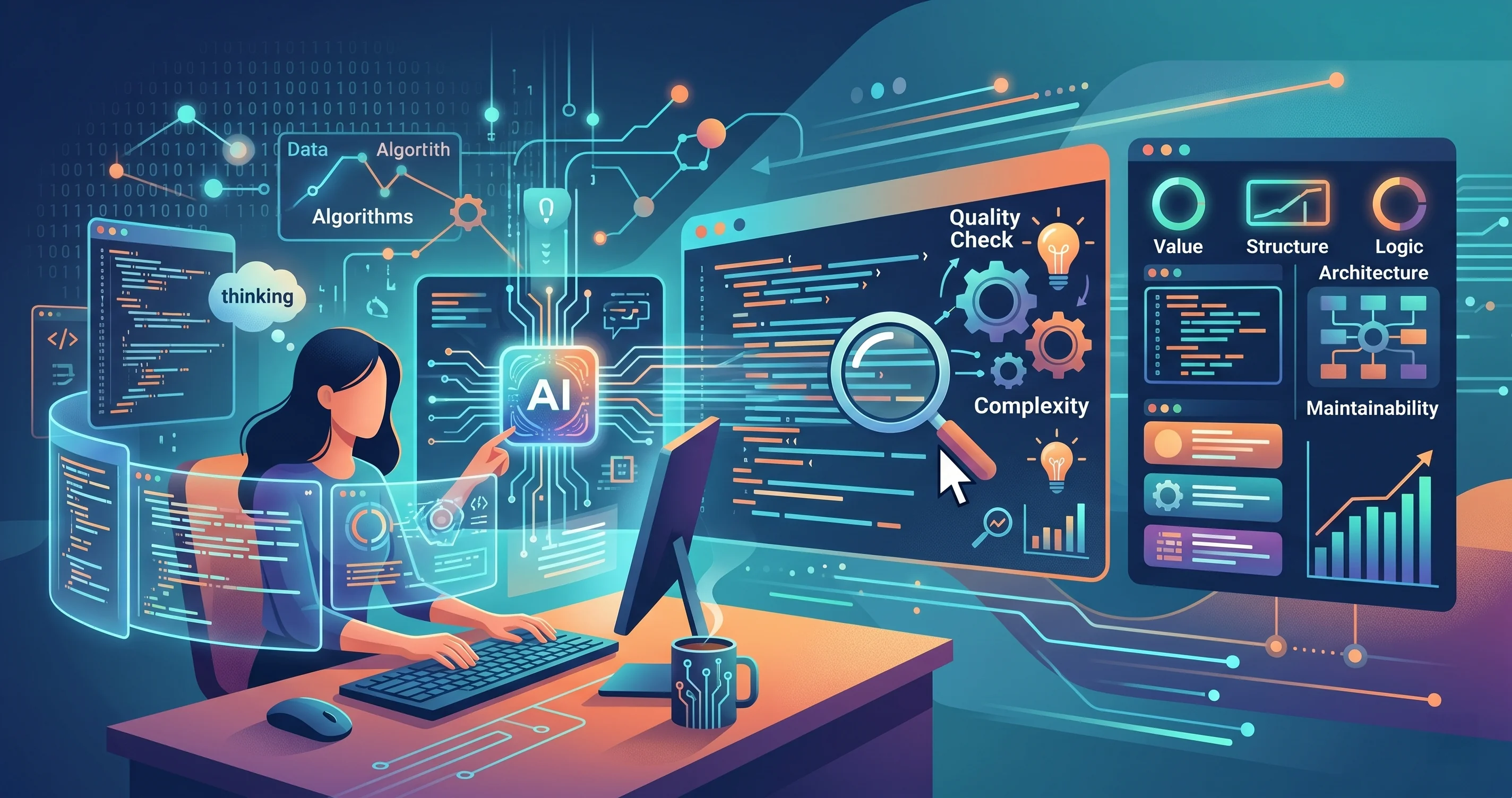
To escape this cycle, you must adopt the Cognitive Ownership Framework. This approach treats AI not as an autocomplete engine for the impatient, but as a sparring partner for architectural decisions. The goal is to maximize the time you spend on high-level system design while offloading the boilerplate to your tools.
True productivity is measured by how quickly a new developer can join your team and understand the codebase. If your AI usage makes your code harder to read or less predictable, you are adding to your team’s long-term burden.
This framework requires you to stop viewing code as a commodity. Instead, view it as a communication tool. Your primary audience is not the machine that interprets the bytes, but the human who has to fix that production outage at three in the morning. When you prioritize readability over speed, you reduce the long-term cognitive load of the entire organization.
How to Apply This
To move from “AI typist” to “AI architect,” you need to change your interaction pattern with your models. Follow these steps to audit your workflow.
Step 1: Force a Pause for Design
Never accept an AI suggestion without first defining the interface. Before you invoke the model to write the implementation, write the function signature and the docstring manually. This forces you to define the constraints and the expected behavior before the AI starts guessing.
// Define the interface first
interface PaymentProcessor {
  process(amount: number, currency: string): Promise<Result>;
  validate(transaction: Transaction): boolean;
}

// Now prompt the AI to implement based on your constraints
// rather than asking it to "write a payment processor"
Step 2: Implement the Readability Tax
For every significant block of AI-generated code, force yourself to refactor it by 20 percent. This could mean renaming ambiguous variables, extracting complex logic into smaller functions, or adding explanatory comments for “clever” segments. If you cannot explain the logic, delete it and write it yourself.
Step 3: Shift the Reviewer Focus
When you review a PR, stop checking if it works and start checking if it is maintainable. Look for code that feels “too smooth.” If a snippet is unusually complex yet generated instantly, flag it for a rewrite. Ask your team if they can explain how the state is managed. If the answer is “the AI did it,” the code does not belong in the main branch.
Common Pitfalls
The most common trap is the Illusion of Flow. You feel like you are in the zone because the code is flowing into the editor, but you are actually experiencing a high-speed feedback loop with a machine. You are not thinking; you are simply confirming. True deep work, as described in GitHub’s research on developer flow, requires intense engagement with the problem space, not just the text editor.
Another pitfall is relying on AI to perform your code reviews. If you use AI to generate the code and then rely on another AI to review it, you have effectively removed the human element from your software development. You are building a system where no one understands the failure modes.
Finally, avoid the temptation to “fix it later.” The “later” rarely comes. If the code is not clear when you write it, it will be twice as opaque when you return to it in a month.
Taking It Further
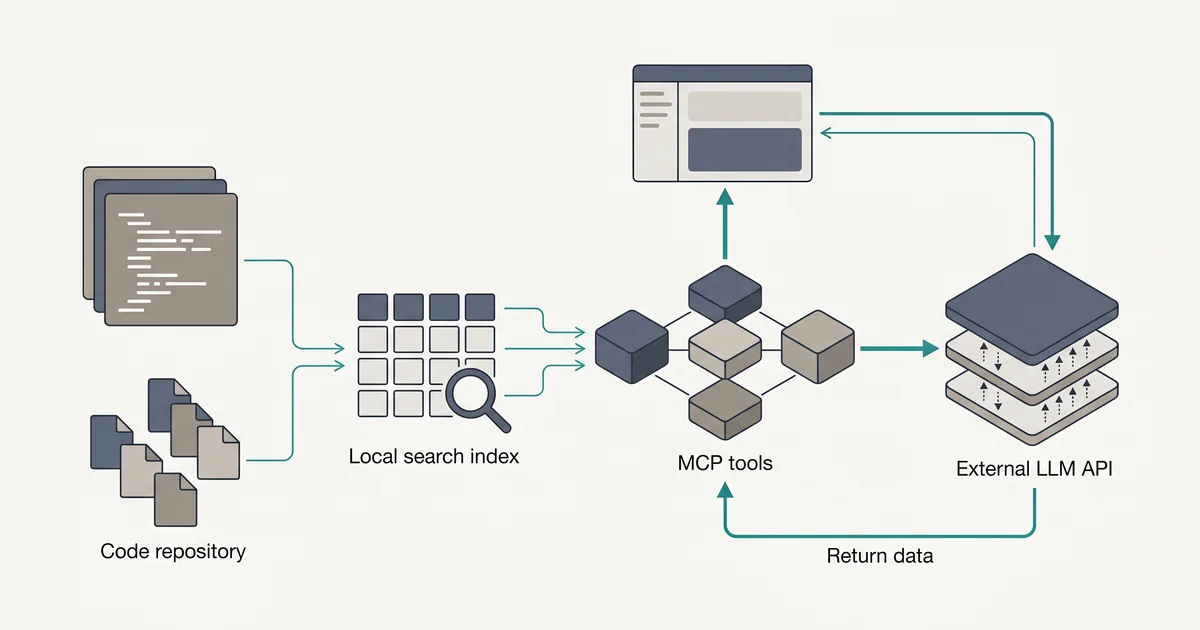
To master this balance, look into tools that prioritize transparency, such as local LLMs that can be indexed against your entire repository context. This ensures the suggestions you get are aware of your existing patterns and style.
Additionally, spend time reading the “Architectural Decision Records” of open-source projects you admire. Understanding how complex systems were documented and structured before the current AI boom will give you a better sense of what “good” code actually looks like. The goal is to build a system that is robust and understandable, regardless of how much help you had along the way.
Wrapping Up
Your value as a developer is not in how fast you can turn a prompt into a PR. Your value lies in your ability to manage complexity and build systems that remain maintainable under pressure. Use AI to handle the tedious work, but never outsource the architectural thinking that defines a long-lasting product. By shifting your focus from speed to clarity, you turn AI from a shortcut into a genuine force multiplier. Start by slowing down today, and you will save countless hours of debugging tomorrow.