Introduction
Your internal developer platform probably did not become complicated overnight. It started with a few templates, a CI workflow, maybe a service catalog, then slowly turned into a living system of Terraform modules, Kubernetes manifests, policy rules, secrets, docs, and exceptions.
That is the part most teams underestimate. Building an IDP is hard, but keeping it coherent is harder. Every new runtime, cloud account, compliance rule, team preference, and incident postmortem adds another layer of design pressure.
The newer wave of LLM tooling is not just helping developers write app code faster. It is starting to help platform teams design, explain, validate, and evolve the platform itself. In this post, you will learn how LLM platform engineering is changing IDP design, where it helps today, and how to apply it safely without outsourcing your architecture judgment.
Your Platform Is Drifting Faster Than Your Team Can Review It
Platform teams usually talk about golden paths, but real organizations run on golden paths plus exceptions.
One team needs a different database version. Another needs a GPU workload. A third has a legacy deployment pipeline nobody wants to touch. Someone copies an old service template, changes three values, and forgets the security context that became mandatory last quarter.
That slow divergence is architectural drift. It shows up as inconsistent Kubernetes manifests, duplicated Terraform, uneven observability, fragile CI pipelines, and documentation that describes the platform you had six months ago.
The frustrating part is that most drift is not malicious. Developers are trying to ship. Platform engineers are trying to avoid becoming a ticket queue. Security teams are trying to enforce rules without blocking every pull request.
Recent platform tooling has moved toward catalogs, scorecards, declarative workload specs, policy as code, and paved roads. Backstage, Port, Cortex, Humanitec, Score, Crossplane, OpenTofu, OPA, Kyverno, and similar tools all point in the same direction: describe what good looks like, then automate as much of the path as possible.
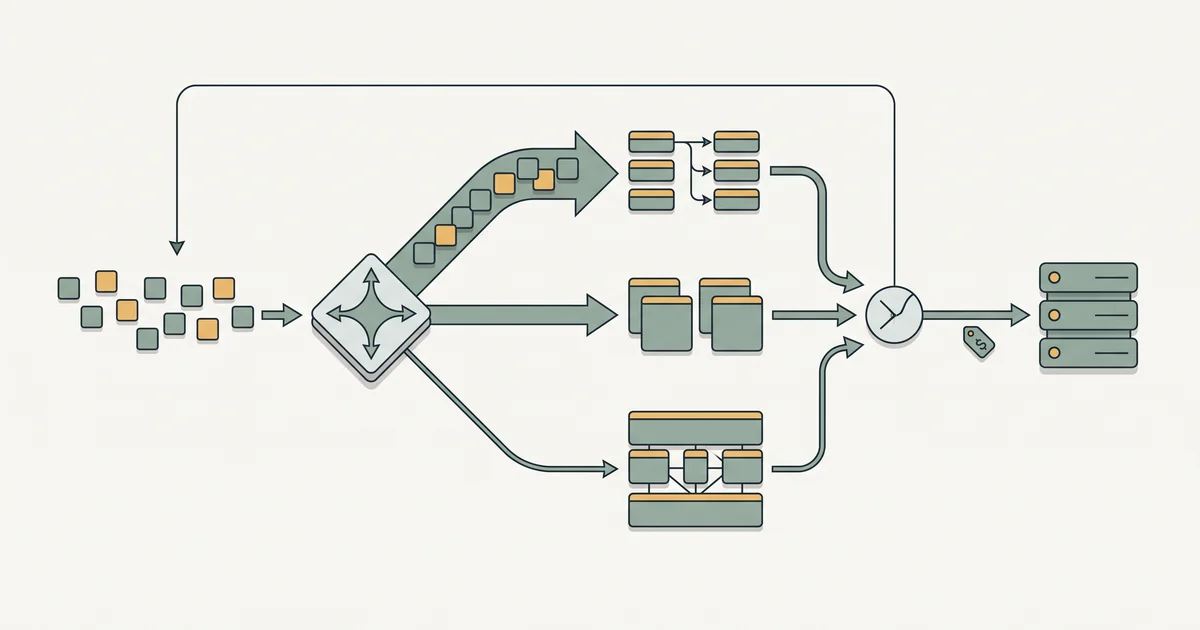
LLMs fit into that trend because your platform is already mostly text. Your architecture lives in YAML, HCL, Markdown, Rego, Dockerfiles, workflow files, runbooks, service metadata, and pull request comments. That makes an AI developer platform less science fiction than it sounds. The model does not need to control production on day one. It can start by reading, generating, comparing, and explaining the material your platform already depends on.
The AI Architect Is Really a Context Engine
Calling an LLM an architect can sound too grand. In practice, the useful version is less magical and more concrete: it is a context engine for platform decisions.
A good platform engineer already does this work manually. You read a team request, remember platform standards, check an existing template, inspect Terraform modules, review security requirements, then produce a recommendation or pull request. An LLM can compress parts of that loop if you give it the right context and strict boundaries.
The important word is context. Generic model output is usually too bland for platform work. It may produce a Kubernetes deployment that looks valid but ignores your naming rules, observability conventions, network policies, or cost controls.
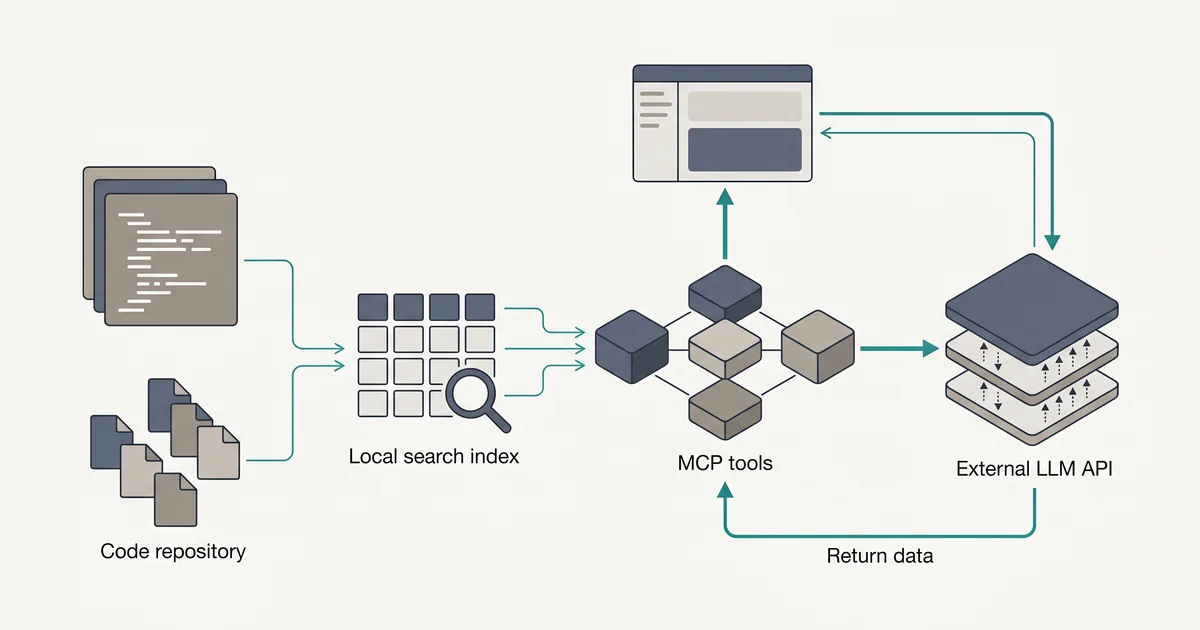
The better pattern is retrieval plus generation. You connect the model to your internal platform docs, approved templates, service catalog, policy rules, and examples of accepted pull requests. Then you ask it to generate or review changes against your actual standards.
For example, you can give an LLM a compact platform brief like this:
You are assisting the platform team.

Our standards:
- All services run on Kubernetes.
- Services expose HTTP on port 8080 unless explicitly approved.
- Deployments must define CPU and memory requests and limits.
- Workloads must include readiness and liveness probes.
- Images must come from ghcr.io/acme.
- Production services require OpenTelemetry tracing.
- Secrets must be referenced from External Secrets, never stored in manifests.
- Public ingress requires security review.

When generating output:
- Prefer existing templates.
- Explain assumptions.
- Flag missing information.
- Do not invent cloud resources.
- Return changes as reviewable files.
That prompt is not architecture by itself. It is a contract. You are telling the model how to behave inside your engineering system.
The same idea applies to code review. Instead of asking, “Is this good?” you ask, “Compare this service against our platform rules and identify drift.” That narrower task gives you better results and makes validation easier.
Review the following Kubernetes manifest against our platform standards.

Return:
1. Blocking issues
2. Non-blocking recommendations
3. Suggested patch
4. Questions for the service owner

Do not comment on style unless it affects reliability, security, or operability.
This is where LLMs become useful for platform architecture automation. They are not replacing Terraform, policy engines, CI, or human review. They are becoming the connective tissue between intent, standards, generated code, and feedback.
Build an LLM-Assisted IDP Without Losing Control
You do not need a full autonomous agent to get value. Start with boring, reviewable workflows where wrong output is caught before it matters.
Step 1: Turn Your Platform Standards Into Source-Controlled Context
If your platform rules live in Slack threads and senior engineers’ heads, an LLM will not save you. It will amplify the ambiguity.
Create a small repository that describes your platform contract. Keep it versioned, reviewed, and close to your templates.
A simple structure works:
platform-standards/
  principles.md
  service-template.md
  kubernetes-rules.md
  terraform-rules.md
  ci-rules.md
  security-rules.md
  examples/
    accepted-fastapi-service/
    accepted-node-service/
    rejected-public-ingress.md
Your goal is not perfect documentation. Your goal is usable context. Write rules the way you would explain them to a new platform engineer.
For example:
## Kubernetes workload rules

Every production Deployment must include:

- `resources.requests.cpu`
- `resources.requests.memory`
- `resources.limits.cpu`
- `resources.limits.memory`
- `readinessProbe`
- `livenessProbe`
- `securityContext.runAsNonRoot: true`

Containers must not run as privileged.
Images must be pinned to a non-latest tag.
This becomes the grounding layer for LLM prompts, retrieval augmented generation, and automated reviews.
Step 2: Use the Model to Generate Pull Requests, Not Production Changes
The safest early pattern is AI-generated pull requests. The model creates files, but your normal review and CI process decides whether they are acceptable.
A useful request might look like this:
Generate a new service scaffold for a Python FastAPI API named billing-events.

Use our platform standards and return these files:
- app/main.py
- Dockerfile
- k8s/deployment.yaml
- k8s/service.yaml
- .github/workflows/ci.yaml

Assume:
- HTTP port is 8080.
- The service emits OpenTelemetry traces.
- The image repository is ghcr.io/acme/billing-events.
- Deployment target is staging only.

If information is missing, list questions before generating files.
The model output should be treated like a junior engineer’s first draft: useful, fast, and reviewable, but not trusted blindly.
A generated Kubernetes deployment might look like this:
apiVersion: apps/v1
kind: Deployment
metadata:
  name: billing-events
  labels:
    app.kubernetes.io/name: billing-events
spec:
  replicas: 2
  selector:
    matchLabels:
      app.kubernetes.io/name: billing-events
  template:
    metadata:
      labels:
        app.kubernetes.io/name: billing-events
    spec:
      securityContext:
        runAsNonRoot: true
      containers:
        - name: billing-events
          image: ghcr.io/acme/billing-events:0.1.0
          ports:
            - containerPort: 8080
          env:
            - name: OTEL_SERVICE_NAME
              value: billing-events
          readinessProbe:
            httpGet:
              path: /health/ready
              port: 8080
            initialDelaySeconds: 5
            periodSeconds: 10
          livenessProbe:
            httpGet:
              path: /health/live
              port: 8080
            initialDelaySeconds: 15
            periodSeconds: 20
          resources:
            requests:
              cpu: "100m"
              memory: "128Mi"
            limits:
              cpu: "500m"
              memory: "512Mi"
This is exactly the kind of boilerplate LLMs handle well. It is structured, repetitive, and easy to validate with linters and policy tools.
Step 3: Add Automated Guardrails Around Every Generated File
Your platform should assume generated code can be wrong.
For Kubernetes, run tools like kubectl --dry-run=server, kubeconform, Kyverno, OPA Gatekeeper, or Datree. For Terraform or OpenTofu, run terraform fmt, terraform validate, tflint, Checkov, or Terrascan. For GitHub Actions, use actionlint.
A basic CI job might look like this:
name: validate-platform-output

on:
  pull_request:
    paths:
      - "k8s/**"
      - "terraform/**"
      - ".github/workflows/**"

jobs:
  validate:
    runs-on: ubuntu-latest
    steps:
      - uses: actions/checkout@v4

      - name: Validate Kubernetes manifests
        run: |
          kubeconform -strict -summary k8s/

      - name: Lint GitHub Actions
        run: |
          actionlint

      - name: Validate Terraform
        working-directory: terraform
        run: |
          terraform init -backend=false
          terraform fmt -check
          terraform validate
Do not skip this step because the model “usually gets it right.” The failures you care about are often subtle: missing resource limits, too-broad IAM permissions, mutable image tags, unsafe ingress, or a default value that works in staging and fails in production.
Step 4: Let the LLM Review Drift Before Humans Do
Generation is useful, but review may be even more valuable.
You can wire an LLM into pull requests to summarize platform drift. The model should not approve or block by itself. It should produce a focused review that helps humans and policy tools work faster.
For example:
You are reviewing this pull request for internal developer platform drift.

Check for:
- New cloud resources outside approved modules
- Kubernetes workloads without probes or resource limits
- Secrets stored directly in code
- CI workflows bypassing required tests
- Public ingress changes
- Missing service catalog metadata

Return only findings that are relevant to platform standards.
Label each finding as blocking, warning, or question.
This gives your reviewers a fast first pass. It also helps developers understand platform expectations before a senior engineer has to repeat the same comment again.
Step 5: Feed Incidents and Production Signals Back Into the Platform
The real win is not just scaffolding. It is using operational feedback to improve the platform.
After an incident, you can ask the model to compare the postmortem against existing templates and standards:
Analyze this incident summary against our platform standards.

Identify:
1. Which platform guardrail should have prevented or reduced impact
2. Which template or policy should change
3. Suggested pull request description
4. Any developer documentation that needs updating
This keeps your IDP from becoming a static portal. It becomes a learning system where incidents, reviews, and production data continuously sharpen the golden path.
Where AI-Driven Platform Work Gets Risky
The biggest mistake is treating an LLM like a source of truth. It is not. It is a probabilistic assistant that can produce confident nonsense in valid YAML.
The first risk is hallucinated capability. A model may reference a Terraform argument that does not exist, a GitHub Actions permission that behaves differently than expected, or a Kubernetes field supported only in a newer cluster version. Your validators will catch some of this, but not all of it.
The second risk is insecure convenience. LLMs often optimize for completing the request, not minimizing blast radius. If you ask for an IAM policy, you may get permissions that are too broad unless your prompt and guardrails are explicit.
The third risk is context leakage. Platform repositories often contain sensitive details: internal hostnames, account IDs, incident notes, security exceptions, and architecture diagrams. If you use external AI services, you need clear rules about what can be sent, what must be redacted, and which workflows require a private model or enterprise controls.
The fourth risk is architectural flattening. If every team accepts whatever the model generates, your platform can become consistent in the wrong way. You may accidentally standardize a weak pattern because it appeared in an old example and the model kept repeating it.
The final risk is skill erosion. Platform engineers still need to understand Kubernetes, cloud networking, CI semantics, identity, reliability, and cost. The model can speed up the boring parts, but it cannot own your tradeoffs.
A good rule: let AI draft, compare, explain, and summarize. Let humans decide, approve, and own the architecture.
Where This Goes Next
The direction is clear: platform interfaces are becoming more conversational, but the backend still needs to be declarative and testable.
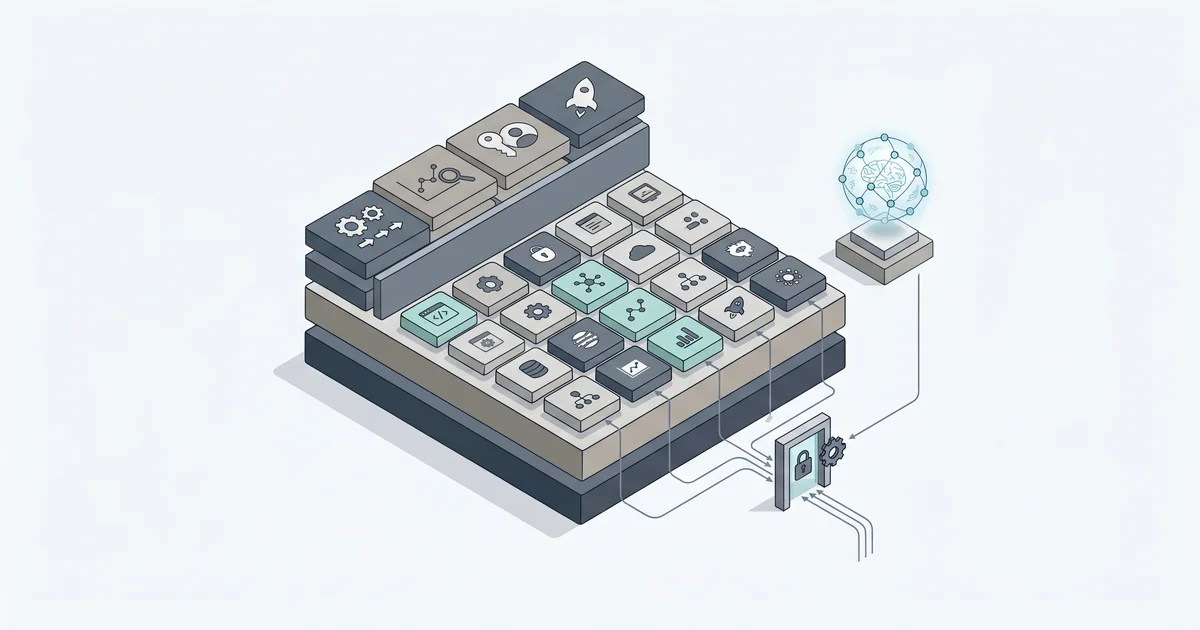
You can already see this in modern developer portals and service catalogs. Teams want to ask, “Create a new API service with a Postgres database and staging deployment,” then receive a pull request, catalog entry, infrastructure plan, and runbook. The chat interface is not the platform. It is a nicer front door to templates, policies, workflows, and approvals.
The next step is agentic platform workflows. An agent could break a request into tasks, query the service catalog, inspect existing modules, generate a Score or workload spec, open a pull request, run validation, and ask for human approval when risk increases.
The best implementations will not be free-form agents clicking around cloud consoles. They will be constrained systems that operate through Git, APIs, policy checks, and auditable workflows.
You can also expect more AI-assisted platform governance. Instead of discovering drift during a painful migration, you will ask questions like:
Which production services do not meet our 2026 baseline for deployment safety?

Group by owning team.
Include missing probes, missing resource limits, unpinned images, and outdated CI templates.
Suggest the smallest safe remediation for each group.
That is a practical use of LLMs. It combines search, summarization, and platform knowledge into something your team can act on.
The Takeaway: Make AI the Draftsman, Not the Building Inspector
The hook is tempting: an AI architect that designs and evolves your whole internal developer platform. The reality is more useful and less dramatic.
LLMs are becoming excellent assistants for platform teams because IDPs are full of structured text, repeated patterns, and policy-heavy decisions. They can generate service scaffolds, explain standards, review drift, summarize incidents, and propose changes to templates.
But your platform only benefits if you keep the workflow grounded. Put standards in source control. Generate pull requests instead of direct changes. Validate everything. Keep humans in the approval path. Feed production lessons back into the platform.
Used that way, an LLM does not replace your platform team. It gives your team more leverage, fewer repetitive reviews, and a faster path from “we should standardize this” to a working, well-tested platform change.