Introduction
You’ve just deployed a new microservice. You’re excited about your code, but then you wait. Another minute ticks by as your container image pulls, initializes, and finally becomes ready to serve requests. This familiar dance of startup times, resource consumption, and the ever-present hum of cloud costs is an unspoken agreement in the world of containerized applications. It’s efficient enough, we tell ourselves, for the scale and flexibility it provides.
But what if “efficient enough” isn’t the only option anymore? What if there’s a fundamentally different way to package and run your server-side code, one that dramatically reduces cold starts, shrinks memory footprints, and slashes your cloud bill? Enter WebAssembly (Wasm), not just for your browser, but as a robust, secure, and surprisingly powerful contender for your backend.
This post will explore why WebAssembly is becoming a viable and compelling alternative to Docker containers for certain server-side workloads, and what this shift could mean for your architecture and cloud spending.
The Silent Cost of Container Overhead
You’ve built your applications with microservices, leveraging containers like Docker for their isolation and portability. It’s a powerful paradigm, enabling agile development and scalable deployments across diverse environments. Yet, you’ve also likely grappled with the inherent overhead that comes with this approach. Every Docker container carries with it a Linux user space, a full operating system environment, however minimal.
This overhead translates directly into friction and cost. Consider the common challenges:
- Slow Cold Starts: When a new instance of your microservice needs to spin up, especially in serverless or auto-scaling environments, the time it takes to pull the container image, decompress it, and initialize the operating system and application runtime can be substantial. This latency directly impacts user experience and often necessitates over-provisioning to maintain responsiveness.
- Resource Bloat: Even a “minimal” container image can be tens or hundreds of megabytes. Each running container demands its slice of CPU and, critically, RAM. When you have dozens, hundreds, or even thousands of microservices, these seemingly small requirements accumulate into significant infrastructure costs. You’re often paying for more compute than your application logic truly needs.
- Security Surface Area: A full OS environment, even a trimmed-down one, presents a larger attack surface. Managing dependencies, patching vulnerabilities, and ensuring proper isolation requires continuous effort and vigilance. While containers offer process isolation, they still share the host kernel, which can be a point of concern for sensitive workloads.
For many applications, this overhead is an accepted trade-off. But for high-density deployments, edge computing, or latency-sensitive functions, these costs—both in performance and dollars—can become a significant burden. This is the friction WebAssembly aims to address, offering a compelling alternative that rethinks the fundamental unit of deployment.
WebAssembly: The Lean Machine Your Server Needs
Imagine a deployment unit that’s not only small and fast but also inherently secure and portable across nearly any operating system or chip architecture. That’s the promise of WebAssembly on the server, a technology rapidly maturing beyond its browser origins. At its core, WebAssembly is a binary instruction format designed for high-performance execution. But it’s the WebAssembly System Interface (WASI) that truly unlocks its server-side potential, providing a standardized way for Wasm modules to interact with the underlying system, like files, networking, and environment variables.
Why does this matter for your backend applications?
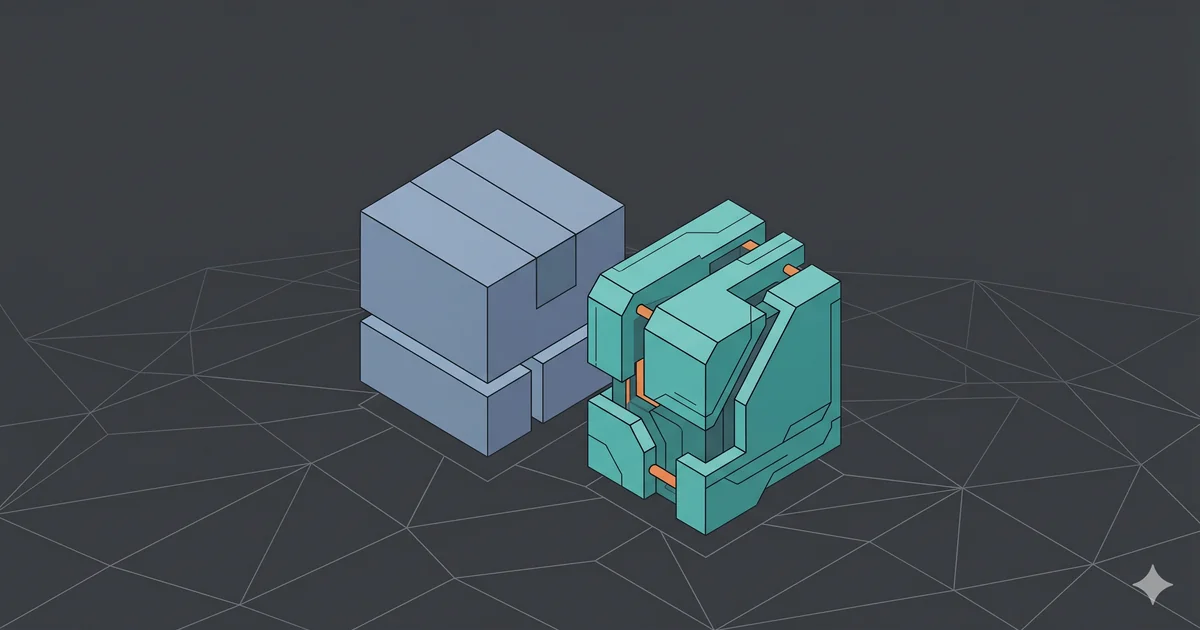
First, Wasm binaries are incredibly small. Instead of packaging an entire operating system along with your application, you compile your code (from languages like Rust, Go, C/C++, or TinyGo) directly into a compact .wasm module. This module contains only your application logic and its necessary dependencies, often resulting in binaries measured in kilobytes, not megabytes.
Second, Wasm modules boast near-instantaneous startup times. Because they don’t carry an entire OS and can be initialized in a highly optimized runtime, their cold start performance blows traditional containers out of the water. Some analyses suggest WebAssembly can offer 100x faster cold starts and significantly lower memory footprints compared to Docker containers. This isn’t just an incremental improvement; it’s a paradigm shift for serverless functions and highly elastic microservices where startup latency directly translates to cost and user experience.
Third, the security model of Wasm is fundamentally different. Each Wasm module runs in a lightweight, isolated sandbox. You explicitly grant permissions for what a module can access like specific files or network connections rather than inheriting broad OS capabilities. This capability-based security model drastically reduces the attack surface compared to a container, where even a “rootless” container might have more ambient privileges than necessary.
Finally, Wasm offers unparalleled portability. A compiled .wasm module can run on any system that has a Wasm runtime, regardless of the underlying operating system or processor architecture. This “write once, run anywhere” ideal, without the baggage of an OS, makes it perfect for edge devices, cross-cloud deployments, and heterogeneous compute environments. It’s a key reason why WebAssembly has been recognized as one of the most impactful emerging technologies in the cloud native space, with increasing adoption for server-side use cases. Even Docker, long the king of containers, is actively investing in and integrating WebAssembly capabilities directly into its tooling, acknowledging its potential to complement and, in some cases, replace traditional containerization.
This collective movement signifies that the webassembly server is no longer a niche experiment. It’s a powerful, production-ready option that demands your attention for new deployments.
Getting Started: Building with WASI
Adopting WebAssembly for your server-side applications isn’t about replacing your entire infrastructure overnight. It’s about recognizing specific use cases where its strengths—speed, small footprint, and security—align perfectly with your needs, particularly for wasi deployment in microservices, serverless functions, and edge computing.
Let’s walk through a conceptual path to getting a WebAssembly service running. The journey typically involves three main steps: writing your application, compiling it to Wasm, and running it with a Wasm runtime.
Step 1: Write Your Application in a Wasm-Compatible Language
Many modern languages now support compiling to WebAssembly. Rust is a popular choice due to its excellent Wasm tooling and performance, but Go, TinyGo, C/C++, and even Python (via projects like Pyodide or Wasmer’s experimental Python support) are viable.
For a simple example, let’s consider a basic HTTP handler written in Rust:
// src/main.rs
use http_req::request;
use std::io::{self, Read, Write};

fn main() -> Result<(), Box<dyn std::error::Error>> {
    // Read the incoming request from stdin (simulated for simplicity)
    let mut buffer = String::new();
    io::stdin().read_to_string(&mut buffer)?;

    // Imagine parsing HTTP request here and crafting a response
    // For this example, we'll just echo a greeting.
    let response = format!("Hello from WASM on the server! You sent: {}", buffer.trim());

    // Write the response to stdout
    io::stdout().write_all(response.as_bytes())?;

    Ok(())
}
This example, while simplified, shows how a Wasm module could receive input (e.g., an HTTP request body) and produce output (an HTTP response). Real-world applications would use specific wasi bindings or frameworks like spin (Fermyon) or wasm-micro-runtime to handle HTTP more robustly.
Step 2: Compile to WebAssembly with WASI Support
Once your code is ready, you’ll use your language’s compiler toolchain to target wasm32-wasi. For Rust, this is straightforward:
rustup target add wasm32-wasi
cargo build --target wasm32-wasi --release
This command will produce a highly optimized .wasm file, typically located in target/wasm32-wasi/release/your_app.wasm. You’ll notice how small this file is compared to a typical container image, often just a few hundred kilobytes for a simple service.
Step 3: Run Your Wasm Module on a WebAssembly Server Runtime
With your .wasm module in hand, you need a runtime to execute it. Unlike Docker, where the runtime is containerd and runc, webassembly server environments use specialized Wasm runtimes. Popular options include Wasmtime, Wasmer, and Spin.
Let’s use Wasmtime for this example:
First, install Wasmtime if you haven’t already:
curl https://wasmtime.dev/install.sh -sSf | bashThen, execute your Wasm module:
echo "World" | wasmtime run your_app.wasmThis command pipes “World” into your Wasm module’s stdin, and Wasmtime executes the module, printing its stdout to your terminal. In a real wasi deployment, a Wasm orchestration platform (like Fermyon’s Spin, Suborbital’s Atmo, or Cloudflare Workers) would manage the incoming network requests, execute your Wasm module, and return the response.
This process demonstrates the fundamental shift: you’re deploying a highly optimized, single-file binary that runs directly within a secure, lightweight runtime, rather than bundling it within a full Linux environment. The result is unparalleled speed, minimal resource consumption, and significant cloud cost optimization for applicable workloads.
Beyond the Hype: Practical Considerations for WASM
While the benefits of WebAssembly for server-side workloads are compelling, it’s crucial to approach its adoption with a clear understanding of its current state and limitations. WASM isn’t a silver bullet, nor is it a direct, drop-in replacement for Docker in every scenario.
One significant consideration is the ecosystem’s maturity. While growing rapidly, the webassembly server tooling and libraries aren’t as exhaustive or battle-tested as the decades-old Linux container ecosystem. You might find fewer off-the-shelf solutions for complex networking, database integrations, or asynchronous operations, though projects like the WASI Component Model are actively addressing these gaps. Similarly, debugging tools are improving but might not yet offer the same familiarity and depth as traditional debuggers for native binaries or containers.
Another aspect is the runtime environment. While WASI provides a standardized interface for system interactions, the specific capabilities and performance characteristics can vary between different Wasm runtimes (e.g., Wasmtime, Wasmer, WasmEdge). You’ll need to evaluate which runtime best fits your operational needs, considering factors like performance, available integrations, and community support. It also requires a new operational mindset; you’re not managing Linux processes and network namespaces, but rather Wasm modules and their granted capabilities.
Finally, Wasm is most impactful for specific types of workloads. Stateless functions, data transformation pipelines, edge logic, and highly concurrent microservices with predictable resource needs are ideal candidates. Applications requiring heavy graphics processing, direct hardware access, or those tightly coupled to specific OS-level features might still be better suited for traditional containers or VMs. The goal is cloud cost optimization and performance gains in the right places, not a wholesale migration without due diligence. Understanding these nuances will help you integrate Wasm effectively, maximizing its benefits while navigating its evolving landscape.
The Future is Modular, Portable, and Tiny
The journey of WebAssembly on the server is still in its early chapters, but the momentum is undeniable. We’re seeing a fundamental rethinking of how compute is packaged and executed, driven by the desire for greater efficiency, security, and portability. This shift holds profound implications for how you might design and deploy your applications in the coming years.
Imagine an infrastructure where your application logic is truly independent of the underlying operating system and hardware. This isn’t just about abstracting away Linux distributions; it’s about compiling your code once and deploying it seamlessly across vastly different environments, from tiny edge devices to massive cloud data centers. This level of portability, combined with Wasm’s sandboxed security, could revolutionize how multi-tenant applications are built and secured, drastically simplifying compliance and reducing operational overhead.
The ongoing development of the WASI Component Model is particularly exciting. It promises to allow Wasm modules to compose and interoperate with each other, creating a modular software ecosystem where you can plug and play components from different languages and teams. This would be a significant leap forward for building complex applications, allowing for even smaller, more focused micro-components. For those grappling with escalating cloud cost optimization efforts, wasi deployment of WebAssembly modules offers a powerful new lever, ensuring you pay only for the compute cycles your application truly needs, without the hidden taxes of bloated runtimes.
Reimagining Your Deployment Strategy
You’ve navigated the complexities of containerization, embraced microservices, and optimized your cloud infrastructure. Now, a new opportunity emerges, one that promises to push the boundaries of what’s possible in terms of performance, security, and efficiency. WebAssembly on the server isn’t just another technology trend; it’s a fundamental paradigm shift for certain workloads.
By leveraging the inherent speed, tiny footprint, and robust security of Wasm modules, you can significantly reduce cold starts, free up valuable memory, and ultimately achieve substantial cloud cost optimization. It’s about moving beyond “good enough” and embracing a lean, mean, microservice machine. Start small, experiment with a critical, latency-sensitive function, and discover how WebAssembly can redefine your approach to server-side deployment. The container might not be obsolete, but for many of your next microservices, your journey with Docker might just be optional.